Wearable Data Streams Quietly Reshaping Live Lines Across Endurance and Precision Events
Written by Zoe Reed · Jun 25, 2026
Wearable Data Streams Quietly Reshaping Live Lines Across Endurance and Precision Events
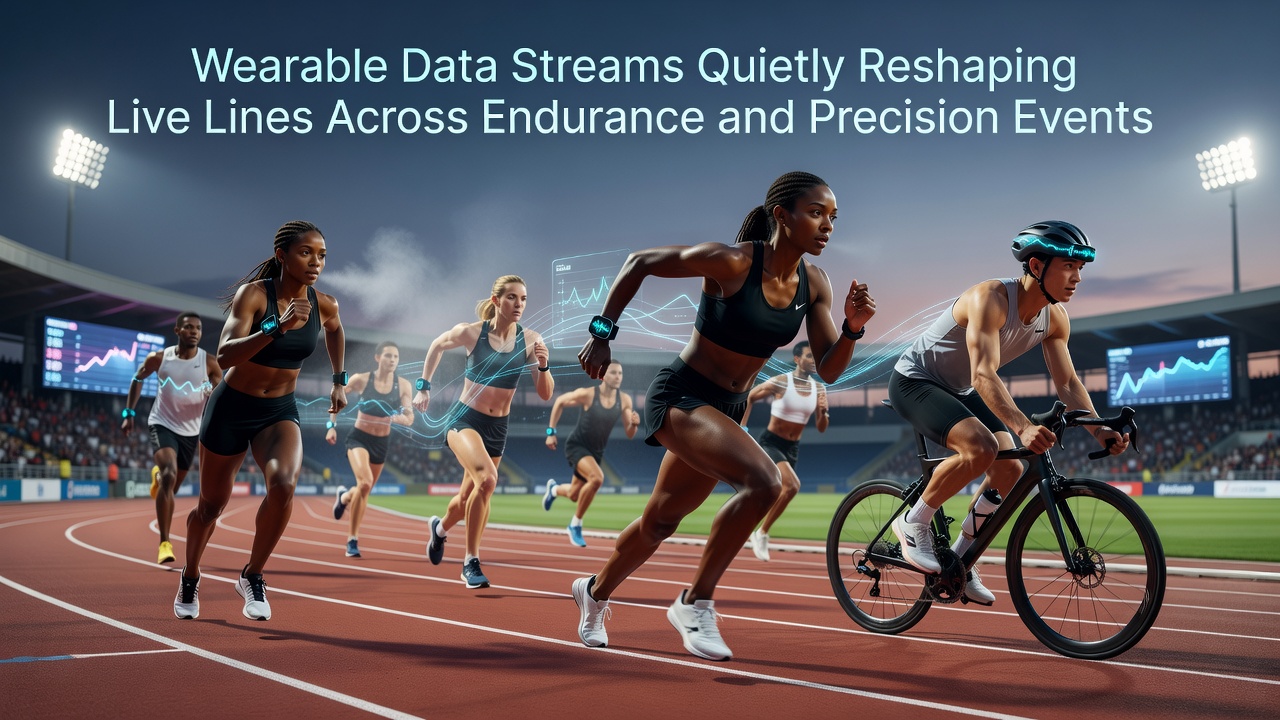
Wearable technology now feeds continuous streams of biometric and kinematic information into betting platforms, and this integration has altered how live odds adjust during endurance competitions such as marathons and triathlons along with precision events including archery and shooting. Devices capture heart rate variability, GPS positioning, acceleration patterns, and even muscle oxygen levels, then transmit those metrics to operators who recalibrate wagers in seconds rather than minutes. Operators began incorporating these feeds around 2023, yet adoption accelerated sharply ahead of major 2026 calendars. In June 2026 several international federations will stage combined endurance-precision festivals where data partnerships allow bookmakers to monitor athlete fatigue thresholds and micro-movements that previously remained invisible to the market.How Real-Time Biometrics Reach Betting Markets
Endurance athletes wear chest straps or arm bands that record every stride and every heartbeat, while precision competitors use sensor-embedded grips or clothing that detects tremor amplitude and breathing cycles. These readings move through encrypted channels directly to data aggregators, and aggregators sell anonymized packets to licensed operators across multiple jurisdictions. Australian Institute of Sport researchers documented in a 2025 technical report how GPS drift combined with heart-rate spikes predicted performance drops in cyclists with 87 percent accuracy, giving markets an earlier signal than traditional scouting alone could supply.
Live lines therefore tighten or widen based on physiological thresholds rather than solely on elapsed time or score. A triathlete whose lactate threshold reading climbs beyond baseline during the bike leg may see outright odds lengthen within thirty seconds, and that adjustment occurs before spectators notice visible slowing.
Precision Events and Micro-Movement Analytics
Archery and shooting federations introduced mandatory sensor trials in 2024, requiring competitors to wear wrist units that log trigger-pull steadiness and postural sway. Data shows that even a 0.3 millimeter increase in barrel movement correlates with a measurable decline in hit probability, and betting syndicates now subscribe to these feeds to adjust proposition markets on individual shots. One European operator reported a 22 percent increase in live-market turnover for precision disciplines after linking sensor output to its pricing engine.
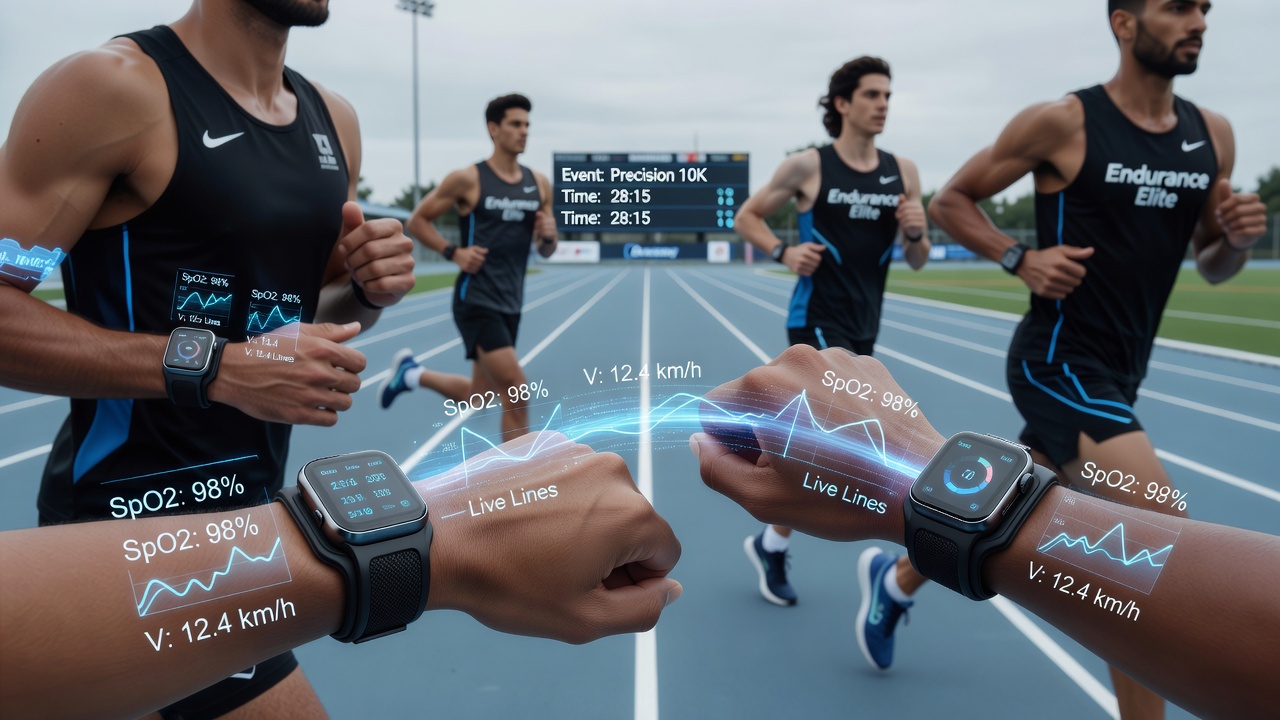
Because precision events unfold shot by shot or arrow by arrow, the data stream produces frequent micro-adjustments rather than the broader swings seen in endurance races. Observers note that markets for final-series head-to-heads now incorporate respiration rate as a secondary variable, allowing odds to reflect momentary focus lapses before the next release occurs.
Regulatory and Technical Frameworks Emerging in 2026
Canadian provincial regulators published draft guidelines in early 2026 that require operators using biometric feeds to publish latency figures and obtain athlete consent for data resale. Similar language appears in draft EU documentation covering cross-border sports data exchanges. These rules aim to prevent selective disclosure while still permitting markets to price information that originates from public competitions.
Technical standards have also converged. Most sensor manufacturers now output data in a common JSON schema that includes timestamp, athlete identifier, and metric type, and this uniformity lets smaller operators integrate streams without building custom parsers. A Stanford University engineering paper released in March 2026 measured average end-to-end latency at 1.8 seconds across commercial 5G networks, down from 4.2 seconds two years earlier, which explains why live-line volatility has increased.
Impact on Different Event Formats
Marathon betting desks now track group pace clusters in addition to individual splits, because aggregated heart-rate data reveals when a lead pack is collectively fading. Darts and snooker have adopted lighter versions of the same approach, using arm-worn units that record release timing and grip pressure during legs or frames. In each case the common thread remains continuous data rather than episodic updates.
June 2026 schedules include several test events where these combined feeds will operate under full regulatory oversight, providing the first large-scale public dataset on how biometric signals translate into odds movement across both endurance and precision formats simultaneously.
Conclusion
Wearable data streams have moved from experimental add-ons to core inputs for live pricing engines in targeted sports. Endurance competitions supply volume-based signals such as sustained heart-rate elevation, while precision events generate high-frequency micro-adjustments based on stability metrics. As June 2026 approaches, regulatory frameworks in multiple regions continue to formalize consent and latency standards, and technical interoperability improves the speed at which these streams reach operators. The result is a narrower gap between an athlete’s physiological state and the odds displayed to the public, a development driven entirely by measurable data flows rather than traditional observation alone.