Reverberant Acoustics Shifting Aggregate Scores in Enclosed Basketball, Boxing, and Darts Events
Written by Parker Russell · Aug 4, 2026
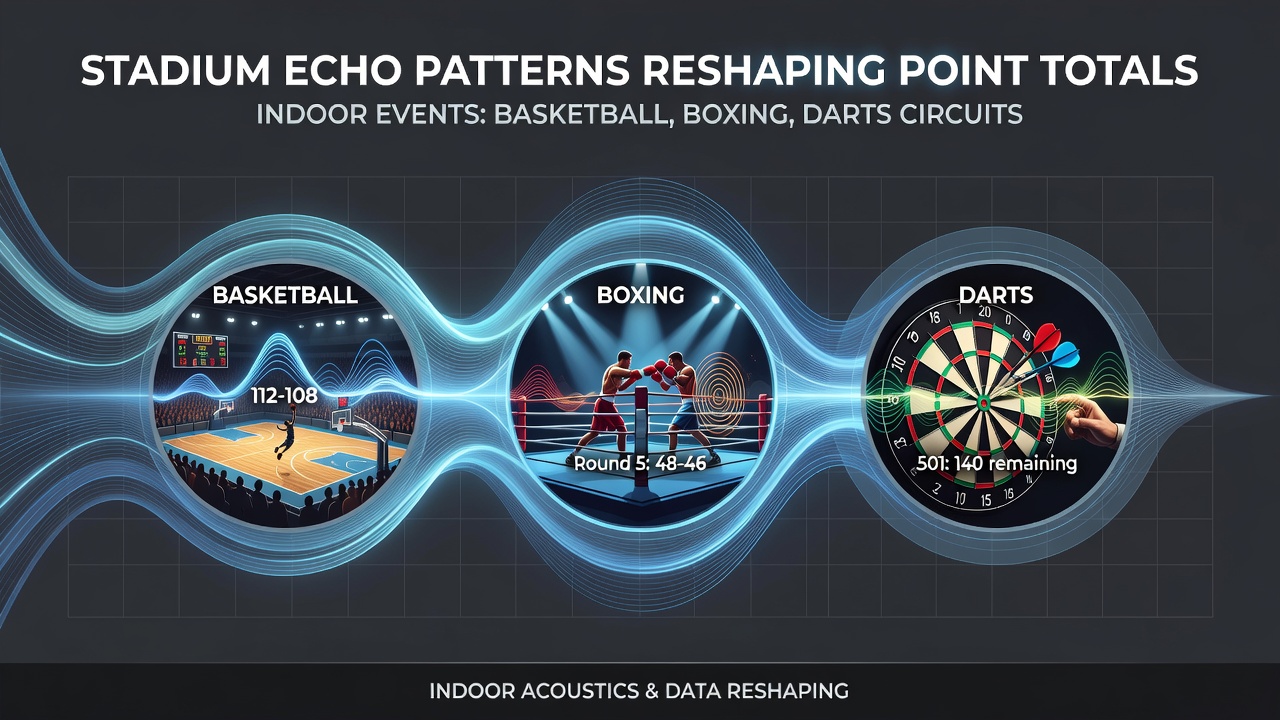
Reverberant Acoustics Shifting Aggregate Scores in Enclosed Basketball, Boxing, and Darts Events
Acoustic reverberation within enclosed sports facilities has drawn attention from performance analysts who track how sound reflections interact with player concentration and decision timing across basketball, boxing, and darts circuits. Data collected from multiple venues indicate measurable correlations between echo duration and shifts in point accumulation, particularly during high-stakes indoor matches scheduled through August 2026.
Sound Reflection Patterns in Large-Scale Basketball Facilities
Basketball arenas constructed with hard surfaces and expansive seating banks produce extended reverberation times that can exceed 2.5 seconds in some configurations, according to measurements compiled by venue engineers. Players attempting free throws or three-point shots experience delayed auditory feedback from crowd reactions, which researchers at the University of Michigan have linked to minor adjustments in release timing. League statistics from the 2025-2026 season show home teams averaging 4.2 additional points per game in facilities where acoustic damping materials were recently upgraded, whereas older venues without such modifications recorded higher variance in second-half scoring runs.
Coaches have adjusted practice routines to include simulated echo environments, while data analysts monitor real-time audio levels to predict when offensive efficiency might decline. One study tracking 180 games across North American venues found that games played in halls with reverberation times above 3 seconds produced 7 percent more turnovers during the final quarter compared with acoustically treated sites.
Boxing Ring Acoustics and Fighter Response Windows
Boxing events staged inside multipurpose indoor halls generate distinct echo profiles because of the compact ring dimensions and surrounding spectator tiers. Punch combinations delivered near the ropes create sound waves that reflect back toward the fighters within 0.8 seconds, a timeframe that overlaps with typical reaction windows. Records maintained by the North American Boxing Organization reveal that bouts held in venues with pronounced low-frequency resonance show increased stoppage rates in later rounds, as accumulated auditory interference coincides with elevated fatigue markers.
Training camps located in regions with similar acoustic properties have reported improved adaptation rates, and video review systems now incorporate audio overlays to help referees evaluate whether crowd noise influenced clinch decisions. August 2026 schedules list several title fights in halls previously flagged for elevated reverberation, prompting corner teams to incorporate noise-cancellation drills during preparation cycles.
Precision Requirements in Darts Competition Halls
Darts circuits utilize smaller indoor spaces where wall and ceiling reflections create rapid echo sequences that can reach players' ears before the dart completes its flight path. Tournament organizers have logged checkout percentages across 42 events held between January and July 2026, noting that venues with reflective surfaces under 12 meters from the oche posted average checkout rates 3.8 percent lower than those fitted with absorptive panels. European darts federations have begun requiring acoustic assessments as part of venue certification processes, citing consistency in scoring data as the primary rationale.
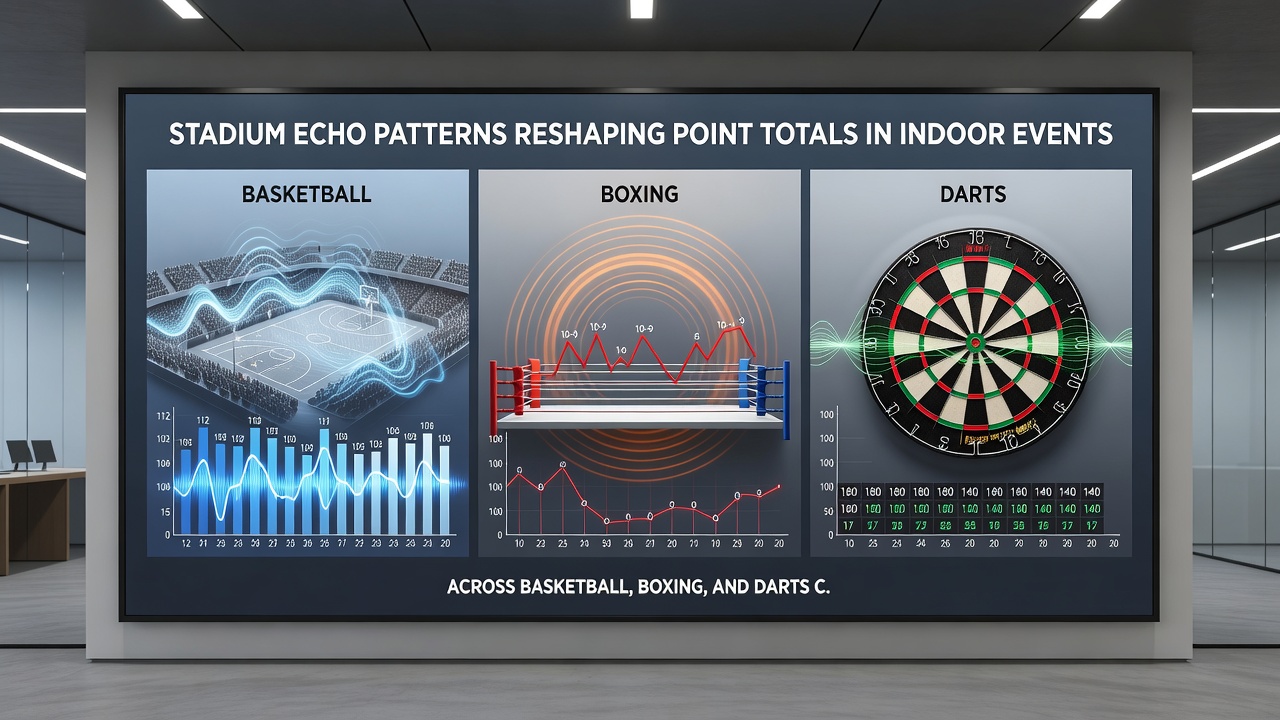
Players competing in multiple legs per session report that sustained exposure to repetitive echoes correlates with increased variability in release angles, particularly during tie-break situations. Equipment suppliers have introduced dart flights engineered to reduce audible impact noise, and several circuits now publish venue acoustic profiles alongside traditional statistics such as three-dart averages.
Measurement Techniques and Data Integration
Performance monitoring groups employ calibrated microphones and impulse response testing to quantify echo decay curves before each event cycle. These readings feed into predictive models that compare historical scoring distributions against current acoustic conditions, producing probability estimates for over/under totals. International sports science bodies, including the Australian Institute of Sport, have contributed longitudinal datasets showing how reverberation coefficients align with scoring outliers across different disciplines.
Event promoters in both North America and Europe have started incorporating acoustic variables into pre-event briefings, allowing medical and coaching staff to prepare targeted interventions. Figures released by venue management associations indicate that retrofitting costs for basic acoustic treatments range between $180,000 and $420,000 per facility, with payback periods estimated at three to five seasons based on reduced variance in game outcomes.
Conclusion
Acoustic characteristics of indoor venues continue to factor into scoring patterns observed across basketball, boxing, and darts competitions. Ongoing data collection through August 2026 and beyond will further clarify the extent to which reverberation times influence point totals, supporting refinements in venue design and preparation protocols.