High Ground Realities: Altitude's Effects on Player Performance and Odds in Elevated Golf, Rugby, and Cricket Competitions
Written by Ben Patterson · Aug 25, 2026
High Ground Realities: Altitude's Effects on Player Performance and Odds in Elevated Golf, Rugby, and Cricket Competitions
High-elevation venues have long presented unique conditions that alter ball flight, player endurance, and recovery rates across multiple sports, adn these shifts directly influence performance data used to set wager lines. Studies from institutions like the University of Colorado have documented how reduced oxygen levels at altitudes above 1,500 meters affect aerobic capacity while changing projectile behavior in golf and cricket. Observers note that these environmental factors create measurable deviations from sea-level norms, prompting bookmakers to recalibrate expected outcomes for events scheduled in such locations.
Effects on Golf at Elevation
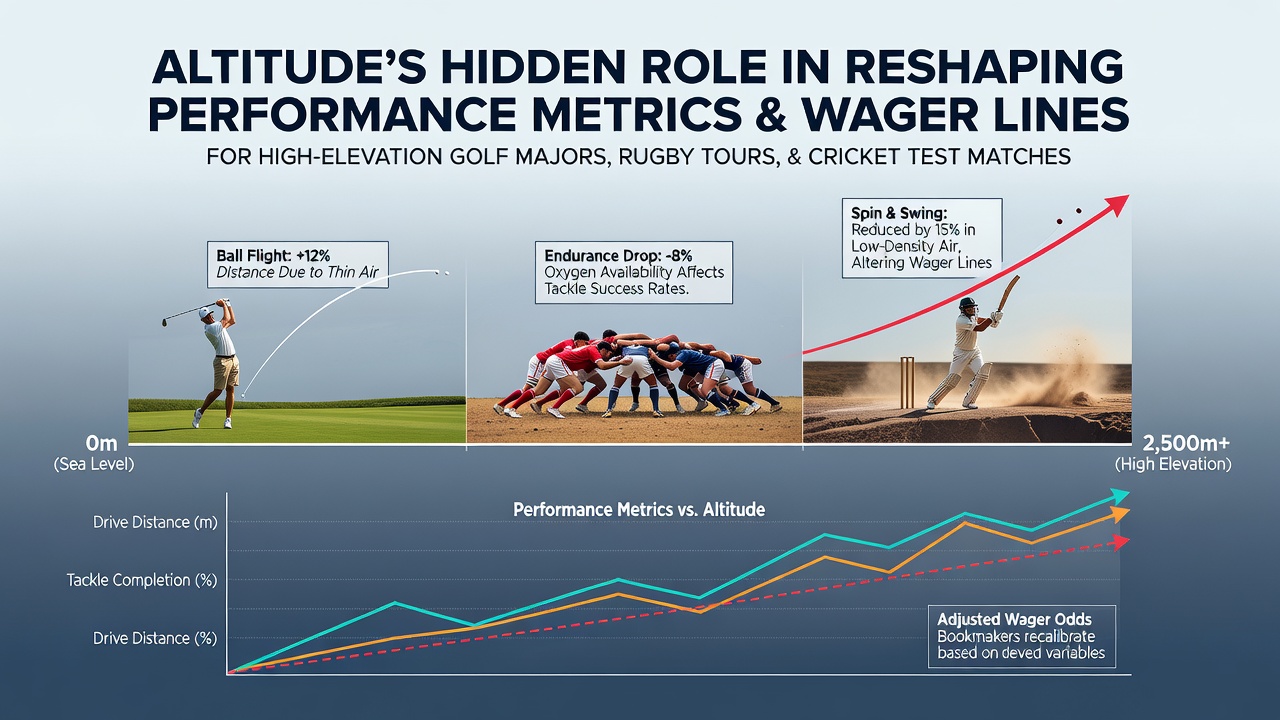
Golf majors held at courses like those in the Rocky Mountains see drives travel farther because thinner air reduces drag on the ball, a phenomenon confirmed through wind tunnel tests and on-course tracking data. Researchers discovered that carry distances can increase by up to 10 percent at 2,000 meters compared with sea level, which alters club selection and scoring averages tracked by statistical services. Those who analyze historical rounds at venues such as the Colorado Rockies courses report lower average scores in certain conditions, leading odds compilers to adjust totals and player props accordingly before major tournaments.
But here's the thing: recovery between rounds also changes because players experience quicker fatigue during practice sessions due to lower oxygen availability, and this shows up in second- and third-round scoring patterns. Data collected during past U.S. Open qualifiers at high sites indicates that morning tee times sometimes produce different results than afternoon slots when heat compounds the altitude stress. Bookmakers incorporate these patterns into live betting markets, where adjusted lines reflect the cumulative physical toll observed across multi-day events.
Rugby Tours and Oxygen Demands
Rugby tours that visit highland stadiums in places such as Johannesburg or Bogotá place additional strain on forward packs because scrums and mauls require sustained power output under reduced air density. Performance metrics compiled by national rugby unions show elevated heart rates and quicker lactate buildup during matches at altitude, which correlates with higher rates of handling errors in the final quarter. Analysts who review match footage note that teams accustomed to sea-level training adapt more slowly, and this lag influences pre-match spread calculations.
What's interesting is how these physiological responses translate into specific wager adjustments. Figures from international rugby board reports reveal that total points scored in high-elevation test matches often fall below projected averages when both sides include many non-acclimatized players. In August 2026 several touring sides are scheduled to play at South African venues above 1,700 meters, and early line movements already reflect historical trends in reduced try counts during similar windows.
Cricket Tests at Height
Cricket test matches staged at grounds such as those in Harare or certain Indian hill stations experience altered ball behavior because seam movement and swing diminish in thinner air while bounce can increase on drier pitches. Researchers from Australian sports science programs have measured these changes through high-speed cameras, finding that bowlers relying on lateral movement lose some effectiveness whereas straight-line pace becomes more dominant. Batting averages compiled over multiple series indicate that teams batting first sometimes post lower totals when dew is absent, prompting odds setters to tweak run-line markets accordingly.

Those who've tracked test cricket data across decades observe that spin bowlers occasionally benefit from the reduced assistance given to seamers, shifting the balance of wicket-taking options in live markets. Match simulations run by cricket analytics groups demonstrate how these venue-specific factors compound over five days, creating opportunities for adjusted over-under lines on total wickets or run rates during the final innings.
Adjustments in Betting Markets
Bookmakers rely on historical datasets and real-time physiological monitoring to recalibrate lines for high-elevation events, incorporating variables such as acclimatization periods and historical scoring deviations. A report issued by the Canadian Centre for Ethics in Sport highlights how environmental factors like altitude appear in performance modeling used by professional leagues, and similar approaches extend to sports wagering operators. When events occur in August 2026, markets for golf majors, rugby tours, and cricket tests will likely open with built-in margins that account for documented altitude effects rather than generic projections.
Turns out that live betting platforms respond quickly once matches begin because early indicators like first-quarter scoring or drive distances provide immediate feedback on whether conditions match pre-event models. Industry organizations such as the European Gaming and Betting Association have noted that transparent data sharing between venue operators and betting firms helps maintain market integrity when environmental variables introduce unexpected variance.
Conclusion
Altitude continues to shape both athletic output and the metrics that underpin wager lines in golf majors, rugby tours, and cricket test matches because physical and aerodynamic changes remain consistent across repeated observations. Performance records, physiological studies, and historical comparisons supply the factual basis for these adjustments, allowing markets to reflect conditions at specific venues without relying on speculation. As schedules for 2026 unfold, the same patterns documented in prior seasons will inform line construction at elevated sites around the world.