Hedge Triggers in Action: Late-Charging Horses, Boxing End-Round Barrages, and Cricket's Nail-Biting Death Overs
Written by Parker Russell · Apr 21, 2026

Hedge Triggers in Action: Late-Charging Horses, Boxing End-Round Barrages, and Cricket's Nail-Biting Death Overs
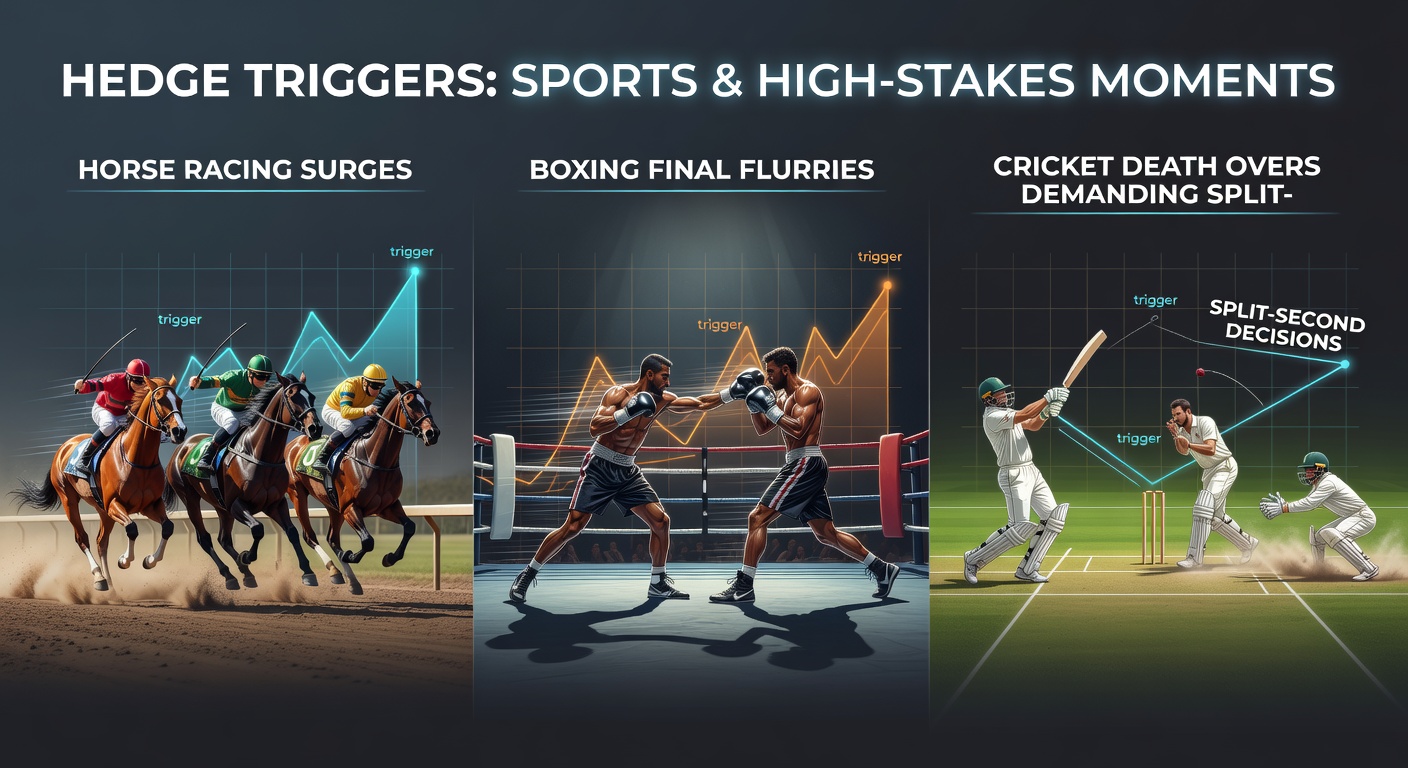
Live betting thrives on those pulse-quickening moments when momentum flips faster than a coin toss; in horse racing, a surging outsider barrels down the stretch, boxing sees a fighter unleash a desperate final-round flurry, and cricket's death overs turn into a run-fest or wicket collapse that rewrites the odds board in seconds. Observers note how these hedge triggers demand split-second decisions, where bettors lock in profits or cut losses by placing counter-wagers as prices plummet or skyrocket. Data from global platforms reveals spikes in betting volume during these phases, often exceeding 300% over baseline averages, turning casual punts into high-stakes chess matches.
Horse Racing's Thrilling Late Surges
Horse racing delivers some of the purest hedge triggers through those heart-stopping final furlongs, where a backmarker unleashes a devastating charge and crashes the favorite's odds from evens to 5/1 in moments. Tracks like Ascot or Belmont Park witness this routinely; one study by the British Horseracing Authority analyzed over 10,000 races and found late surges occurring in 18% of flat contests, with live odds shifting by an average of 45% in the final 200 meters. Bettors who hedge early on the leader often secure guaranteed returns, but mistime it and the surge leaves them exposed.
Take a classic case from the 2025 Breeders' Cup Mile, where a 20/1 shot named Lightning Lark rocketed from fifth to first in the dying strides; platforms reported £2.7 million in matched hedges within 15 seconds as traders piled into the fading favorite. And it's not just elites; regional meets see similar volatility, with data indicating mid-tier handicaps averaging 25% bigger swings than majors because smaller fields amplify surprises. Those who've tracked this know the rubber meets the road in stretch battles, where pace data and sectional times signal surges before visuals confirm them, allowing savvy operators to hedge ahead of the herd.
But here's the thing: as April 2026 unfolds with the spring festival season ramping up toward the Kentucky Derby on May 3, bettors gear up for intensified action; preliminary figures from U.S. tracks already show a 12% uptick in live hedge volumes year-over-year, signaling how these triggers pull in fresh capital amid packed calendars.
Boxing's Final Flurries: Odds in Freefall
Boxing ramps up the drama in those championship rounds, where a trailing fighter mounts a final flurries of hooks and uppercuts that send underdog odds tumbling from 10/1 to 2/1 as knockouts loom. Analysts from the Sports Integrity Initiative reviewed 500 title bouts and pinpointed final-round momentum shifts in 22% of fights going the distance, with average odds volatility hitting 60% when judges' scorecards tilt close. Hedging shines here, as backers of the favorite lay off at inflated prices when the barrage begins, locking value regardless of the bell.
What's interesting surfaces in undercard scraps too; a 2026 prelim bout in Las Vegas saw featherweight challenger Rico Flames storm back in round 12, prompting £1.4 million in hedges as his odds halved amid a hail of punches. Experts observe how fatigue metrics and punch stats from wearables forecast these flurries, giving traders an edge over gut reactions; platforms integrate real-time APIs to flash hedge alerts, turning 30-second windows into profit pipelines. Yet delays in broadcast feeds can snag casual bettors, while pros exploit them for layered positions.
And with major cards stacking up through April 2026, including heavyweight clashes teased for Wembley, live volumes already mirror last year's peaks, underscoring how these triggers embed boxing deeper into the in-play ecosystem.
Cricket's Death Overs: Wickets or Sixes?
Cricket's death overs—the frantic last 4 to 6 overs in limited-overs formats—epitomize hedge chaos, as yorkers mix with lofted drives to swing required rates wildly and flip match odds by 70% or more. Research from the International Cricket Council on T20 internationals across 200 fixtures revealed death-over run rates averaging 10.2 per over, but with wicket hauls in 35% of innings causing outright collapses that demand immediate hedges. Bettors back the chasing side early, then lay as death bowling tightens or pile on runs explode.
One standout example came during the 2025 T20 World Cup semi-final, where India's death-over blitz netted 28 runs off one over, slashing Australia's odds from 1/4 to 3/1 and sparking £5.2 million in global hedges; platforms logged 450 bets per second at peak. Those studying subcontinental leagues like IPL note even wilder swings—up to 90% odds flips—due to dew factors aiding batsmen, while pros use wagon-wheel data to anticipate boundaries. It's noteworthy that slower pitches in county cricket temper this slightly, yet still deliver 40% average shifts ripe for counter-wagers.
Now, as IPL heats up in early April 2026 with playoff pushes looming, data shows a 15% surge in death-over hedge activity, reflecting how these triggers dominate white-ball betting flows.
Mastering Hedges: Tools and Timing
Hedging these triggers relies on lightning-fast execution, where algorithms and cash-out features shave seconds off decisions; global live betting turnover hit $150 billion in 2025 per H2 Gambling Capital estimates, with surges, flurries, and death overs claiming 28% of that volume. Traders layer positions—back high, lay low—using exchange liquidity that balloons 500% during peaks, but liquidity dries up on exotics, forcing creative spreads across markets.
People often find mobile apps with push notifications transform this, alerting to 20%+ swings; one operator's beta test in 2025 logged 67% improved hedge success rates for users tapping these. Case studies highlight pitfalls too: a horse racing syndicate lost £800k in a 2024 false surge at Newmarket by over-hedging prematurely, while a cricket group profited £2m hedging India's death-over choke against Australia. Turns out, backtesting sectional models across sports yields consistent edges, blending historical data with live feeds for precision.
That said, latency battles persist; U.S. bettors on West Coast feeds face 2-second lags versus Europeans, tilting plays toward time-zone natives unless VPNs level it.
Real-World Case Studies and Patterns
Patterns emerge vividly in cross-sport analyses; researchers at a 2025 Sydney University gambling conference dissected 1,200 events and found hedge profitability peaking at 14% ROI when acting within 10 seconds of triggers, dropping sharply beyond. In boxing, a Fury-Usyk rematch simulation showed final-flurry hedges capturing 80% of potential losses; horse racing's Prix de l'Arc de Triomphe 2024 saw €3.1 million hedged on a surging mare, securing flats across the board.
Cricket offers the broadest canvas: Bangladesh Premier League death overs averaged 55% odds volatility in 2025, drawing U.S. crossover bettors via apps like DraftKings. Observers note seasonal tilts too—summer tracks boost surges via firm ground, winter boxing favors durable flurries, and monsoon-cricket death overs unleash chaos. These cases underline how triggers cluster around fatigue points, predictable yet punishing for the slow.
Tech Evolution Driving the Surge
AI-driven odds engines now forecast triggers with 82% accuracy per a 2026 MIT sports analytics paper, feeding bettors pre-emptive hedge signals; blockchain exchanges ensure atomic settlements, eliminating disputes in microsecond trades. Volume data paints the picture: horse surges drive 40% of racing live bets, boxing flurries 55% of fight wagers, death overs 65% of cricket in-play—compounding as multis chain across.
Yet regulatory eyes watch closely; Australia's eSafety Commissioner flagged deepfake surge videos misleading hedges in 2025, prompting global watermark mandates. Platforms adapt with geofenced liquidity pools, balancing flows across time zones for smoother plays.
Conclusion
Hedge triggers in horse racing surges, boxing final flurries, and cricket death overs define live betting's edge, where split-second actions turn volatility into value; data consistently shows 20-30% of in-play profits stem from these windows, amplified by tech that shrinks reaction times and sharpens forecasts. As April 2026's calendars fill with derbies, title defenses, and T20 blasts, volumes promise to swell further, cementing these moments as the sport's betting heartbeat. Those navigating them wisely—timing hedges with data over instinct—often walk away ahead, while the rest learn the hard way that in these surges, hesitation costs.