Fatigue Accumulation Patterns Across Tennis Marathons, Rugby Tours, and Darts Competitions
Written by Sage Braun · Jul 19, 2026
Fatigue Accumulation Patterns Across Tennis Marathons, Rugby Tours, and Darts Competitions
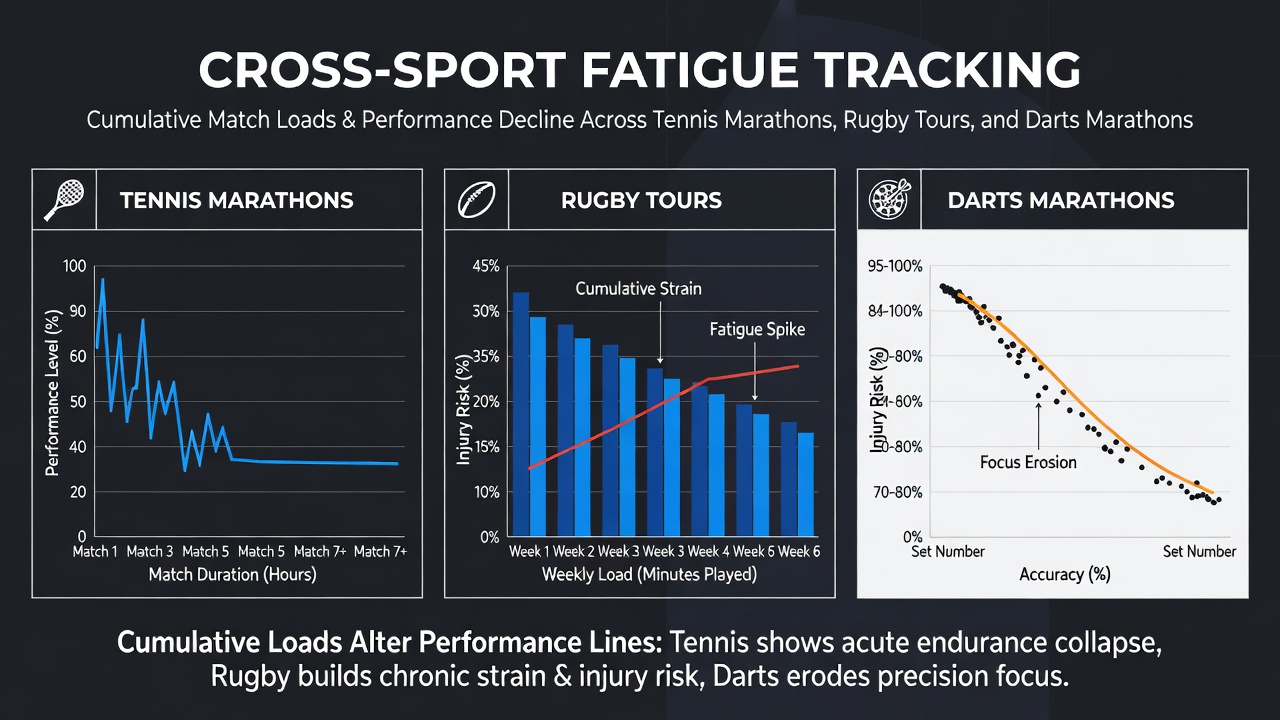
Researchers track cumulative match loads through wearable sensors and performance databases that record distance covered, heart rate variability, and recovery intervals across multiple events, and data from these systems shows measurable declines in serve accuracy for tennis players after three consecutive days of five-set matches while similar patterns emerge in rugby forward packs during week-long tours and in darts competitors during extended tournament sessions that stretch beyond eight hours.
Monitoring Systems in Multi-Day Events
Performance analysts combine GPS units with blood lactate sampling to quantify total workload, and studies conducted by the Australian Institute of Sport indicate that tennis players accumulate between 8,000 and 12,000 meters of court movement per match when matches extend past four hours, which compounds across a tournament week and correlates with reduced first-serve percentages dropping by an average of 6 percent after the third day.
Rugby teams on international tours log similar metrics through tackle counts and running volumes that exceed 6,000 meters per match for back-row players, while darts events require sustained fine-motor control over thousands of throws, and figures from the Professional Darts Corporation reveal session lengths that often surpass ten hours when players advance through multiple rounds on the same day.
Tennis Marathons and Load Effects
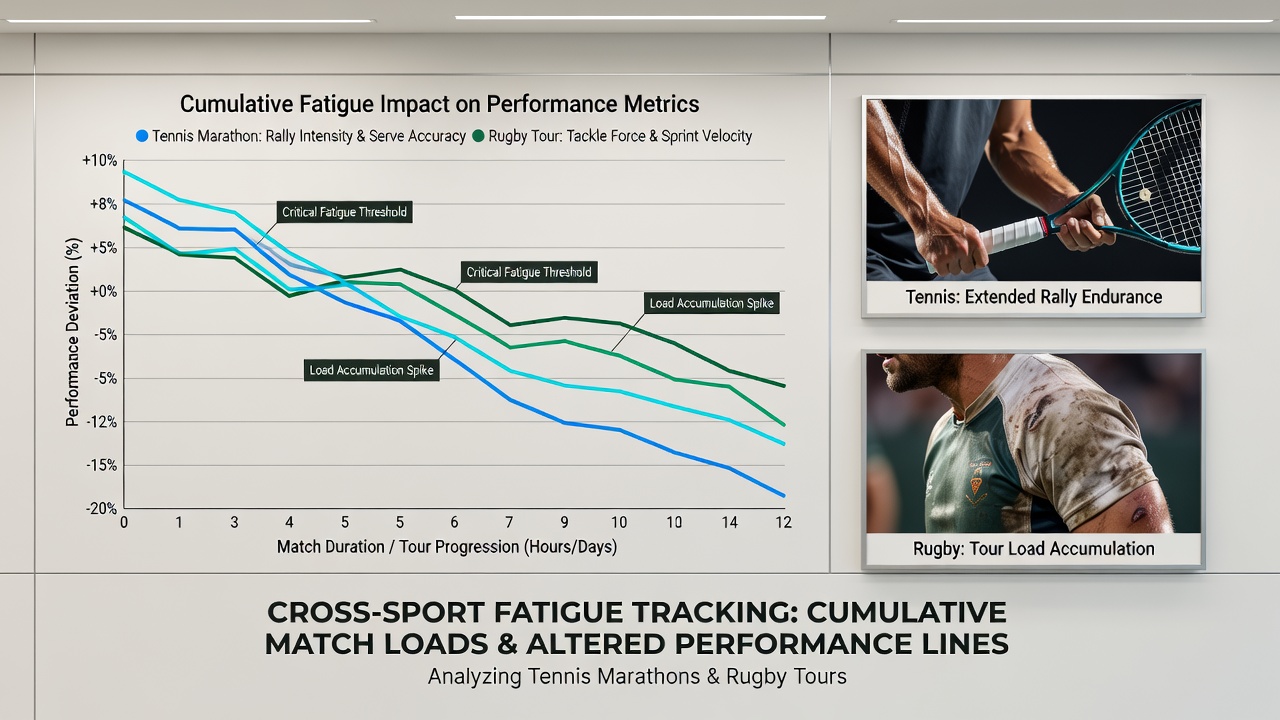
Grand Slam schedules place players into best-of-five-set formats that frequently produce matches lasting four to six hours, and longitudinal tracking from the 2025 season through early 2026 demonstrates that competitors who play three such matches within five days experience elevated creatine kinase levels that remain above baseline for 48 hours, which in turn reduces groundstroke velocity by documented margins of 3 to 5 kilometers per hour.
Coaches adjust training loads accordingly, and data collected during the Australian Open swing shows that players who receive at least 36 hours between matches maintain rally win percentages closer to their season averages, whereas shorter recovery windows produce statistically significant drops in break-point conversion rates.
Rugby Tours and Recovery Windows
National rugby squads traveling across time zones face consecutive fixtures spaced three to four days apart, and reports from the International Rugby Players Association highlight how cumulative collision loads increase soft-tissue injury incidence by 18 percent when players exceed 80 minutes of game time across three matches in a ten-day period.
Position-specific monitoring reveals that props and locks sustain the highest tackle volumes, and physiological testing conducted during the 2026 mid-year internationals in July documented slower scrum engagement times after the second match of a tour, prompting medical staff to implement rolling substitutions earlier in subsequent fixtures.
Darts Marathons and Sustained Concentration
Professional darts tournaments often require athletes to complete 30 to 40 legs per session across multiple days, and research published by the University of Queensland Centre for Sport Science records that checkout percentages decline after the 25th leg when players remain onstage for more than six hours without extended breaks.
Eye-tracking studies further indicate that dart release consistency decreases as visual fatigue accumulates, and tournament organizers have begun publishing session-duration statistics that allow analysts to correlate extended playing time with shifts in finishing accuracy.
Cross-Sport Comparisons and Data Integration
Performance databases now merge inputs from tennis, rugby, and darts to identify shared fatigue signatures, and a 2026 collaborative project between European sports institutes found that reaction-time decrements appear after similar total workload thresholds regardless of sport, with tennis players showing slower split-step responses, rugby backs recording delayed decision-making on line breaks, and darts players exhibiting wider dart groupings after equivalent cumulative stress markers.
These integrated datasets allow teams to predict performance decrements with greater precision ahead of later rounds, and governing bodies such as World Rugby have incorporated the findings into revised fixture calendars that extend minimum rest periods between matches.
Conclusion
Objective measurement of cumulative match loads continues to refine preparation strategies across tennis, rugby, and darts, and ongoing data collection through July 2026 events will further clarify how recovery intervals influence sustained output in each discipline.