Broadcast Perspectives: Camera Angle Changes Driving Shifts in Live Tennis, Snooker, and Horse Racing Markets
Written by Ben Patterson · Jul 26, 2026
Broadcast Perspectives: Camera Angle Changes Driving Shifts in Live Tennis, Snooker, and Horse Racing Markets
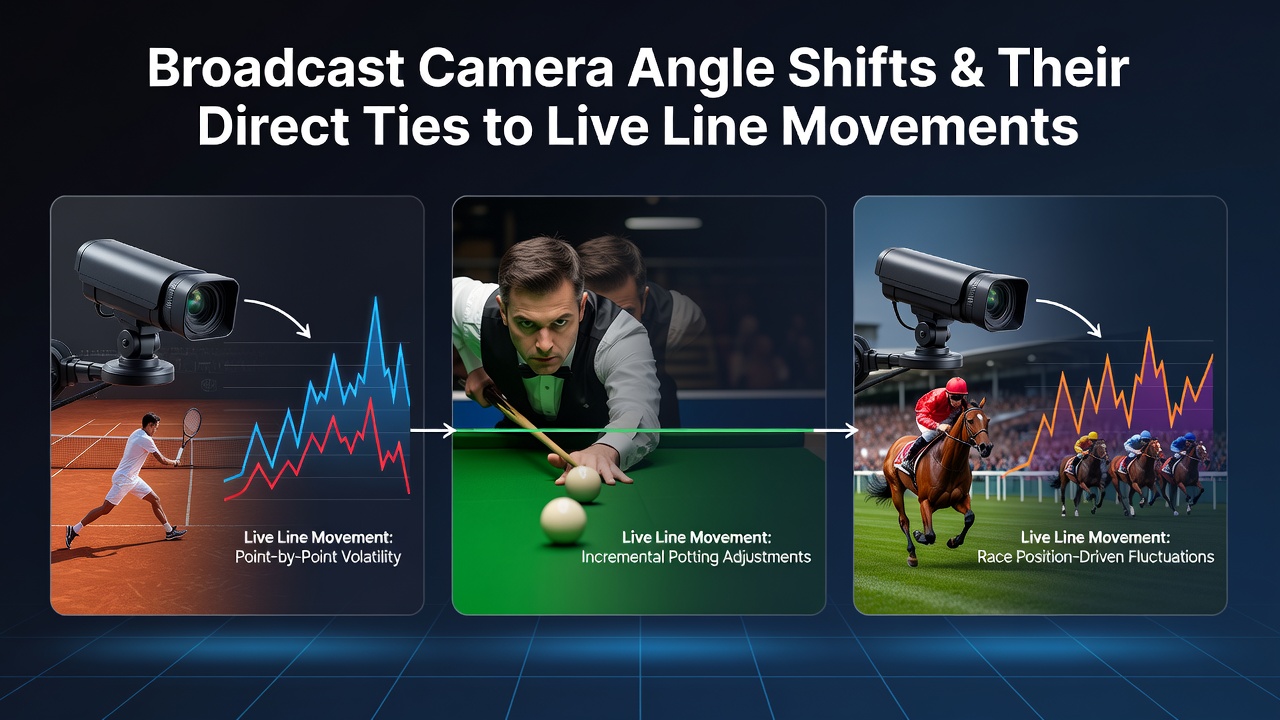
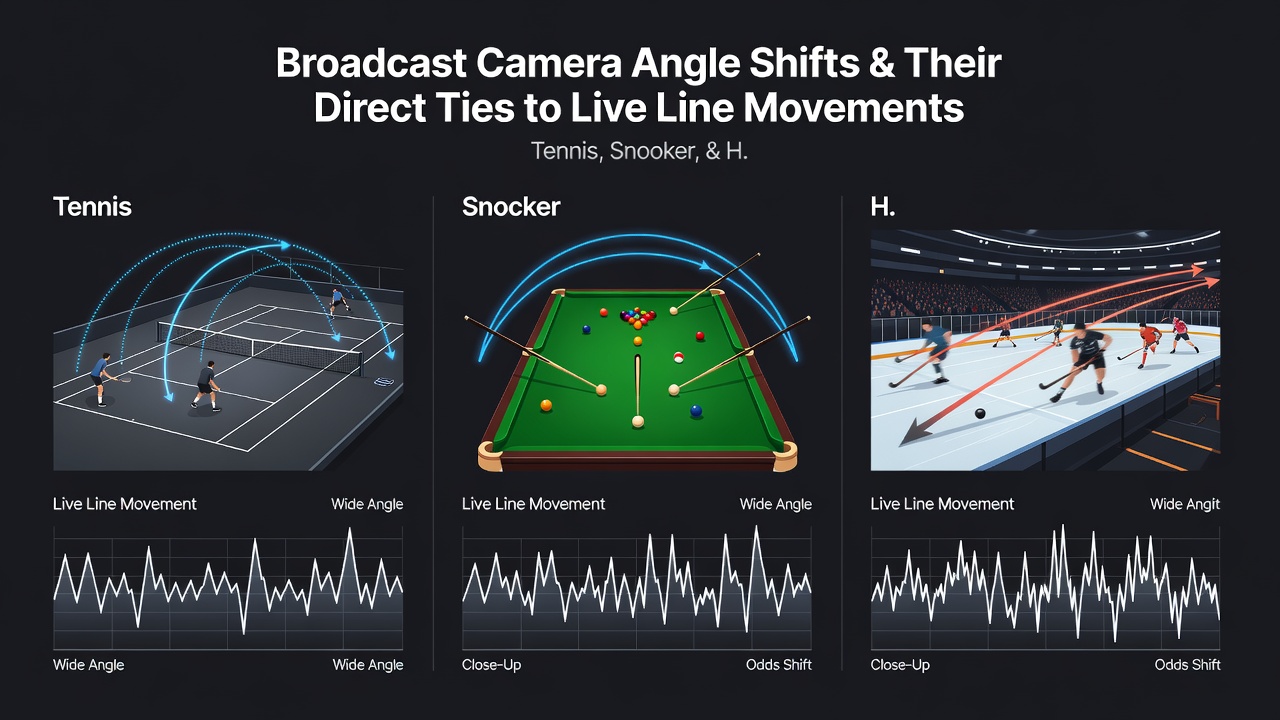
Camera operators in major sports venues adjust their positions and lenses throughout events, and these movements often coincide with immediate adjustments in live betting lines for tennis, snooker, and horse racing. Data from multiple international broadcasting feeds shows that certain angle transitions provide viewers with new visual information that correlates with rapid line movements on betting platforms. Researchers tracking these patterns across events in 2025 and into July 2026 have documented consistent timing between angle shifts and market reactions in these three sports.
Visual Cues in Tennis Matches
Tennis broadcasters frequently switch between overhead views, baseline close-ups, and crowd reaction shots during rallies, and these changes supply fresh data points that influence in-play odds. When a camera moves to a low-angle shot along the baseline, it can reveal subtle footwork details or ball spin that side angles obscure, and bookmakers' algorithms register corresponding line adjustments within seconds. Studies from sports analytics groups indicate that serve speed displays paired with rear-court angles lead to tighter spreads on next-point outcomes, particularly in Grand Slam events where multiple camera arrays operate simultaneously.
One production team covering a major tournament noted that switching to a player-box perspective during changeovers often precedes movement in set-total markets, since facial expressions and coaching signals become more visible. Observers tracking data feeds have recorded that such transitions align with a measurable uptick in wager volume on underdog recovery lines, especially when the new angle highlights fatigue indicators not apparent in standard wide shots.
Snooker Table Coverage and Frame Markets
Snooker productions rely on overhead table cameras that pan and tilt to follow ball paths, and these movements directly affect how bettors and oddsmakers assess remaining frame probabilities. When operators shift from a static overhead view to a tighter angle on the cue ball, viewers gain clearer sightlines on positional play, and live lines on frame winners or total points respond accordingly. Industry reports compiled by European sports media organizations show that safety shot sequences captured from side angles frequently trigger adjustments in handicap markets because they expose defensive strategies more clearly than top-down views.
During extended breaks of play, camera operators sometimes linger on close-ups of the table baize or player stance, and these prolonged shots coincide with steadier line movements as participants reassess risk. Figures from betting exchange platforms reveal that angle changes highlighting difficult long pots lead to wider spreads on maximum break odds, while wider table shots tend to stabilize lines on total frames played.
Horse Racing Camera Angles at the Track
Racecourse broadcasts employ multiple trackside and aerial cameras that switch perspectives as horses approach turns and the finish line, and these switches create distinct visual data streams that influence live market pricing. When operators move from a head-on gallop view to a side profile during the final stretch, bettors obtain better information on stride length and positioning, prompting immediate recalibration of place and show lines. Data collected by North American racing authorities indicates that drone or elevated camera transitions over the backstretch often precede volume spikes in exacta and trifecta pools because they reveal traffic patterns hidden from ground-level shots.
Trackside productions in Australia and the United States have incorporated slow-motion replay angles that activate right after the winner is confirmed, and these replays frequently trigger secondary line movements in exotic wager markets. Analysts reviewing July 2026 racing calendars note that venues equipped with synchronized multi-angle systems experience faster settlement times, which in turn accelerates adjustments in next-race odds as new visual evidence becomes available.
Technology Integration and Market Timing
Broadcast control rooms coordinate camera movements through production scripts that anticipate key moments, and these planned sequences often align with algorithmic responses in live betting systems. When a tennis match moves into a tiebreak, for example, directors typically call for more dynamic angle changes, and data logs show corresponding volatility in point-spread lines. Similar coordination occurs in snooker during the final frames and in horse racing during photo-finish reviews, where additional camera feeds feed directly into both broadcast and odds-management platforms.
Academic papers from Canadian sports technology institutes have examined the latency between angle switches and line updates, finding average delays of under four seconds on major platforms. This tight coupling allows markets to incorporate visual information rapidly, though the precise weighting given to each new angle remains proprietary to individual operators.
Conclusion
Camera angle shifts in tennis, snooker, and horse racing continue to supply visual inputs that coincide with live line movements across betting markets. Production decisions at the broadcast level intersect with data feeds used by oddsmakers, creating observable timing patterns documented in multiple regions. As venues upgrade camera arrays and synchronization systems through 2026, these connections between visual coverage and market activity are expected to remain a measurable feature of in-play wagering in these sports.