Acoustic Environments Shaping Live Odds Movements in Cricket, Boxing, and Snooker
Written by Zoe Reed · May 26, 2026
Acoustic Environments Shaping Live Odds Movements in Cricket, Boxing, and Snooker
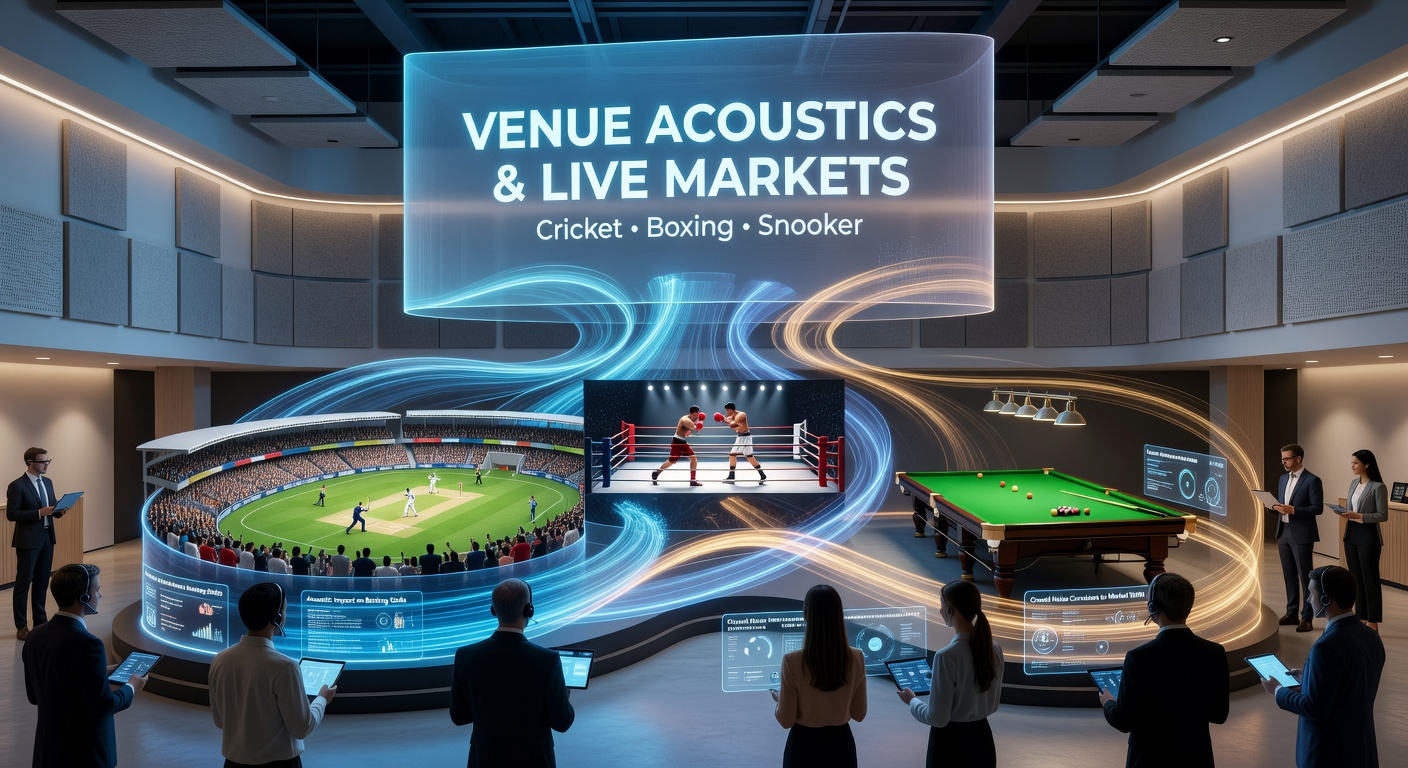
Venue acoustics play a measurable role in how live betting markets respond during cricket matches, boxing bouts, and snooker tournaments, because sound levels directly influence player focus and execution timing. Data from venue monitoring systems shows that ambient noise in enclosed or semi-enclosed spaces can reach peaks above 85 decibels during peak crowd moments, and these spikes correlate with slight increases in unforced errors or delayed reactions that in-play traders monitor closely. Observers note that when sound reverberation extends beyond two seconds in older arenas, players in precision-based sports often adjust their pacing, which then registers in shifting probabilities for next-ball or next-round outcomes.
Cricket: How Stadium Echoes Affect Death-Over Markets
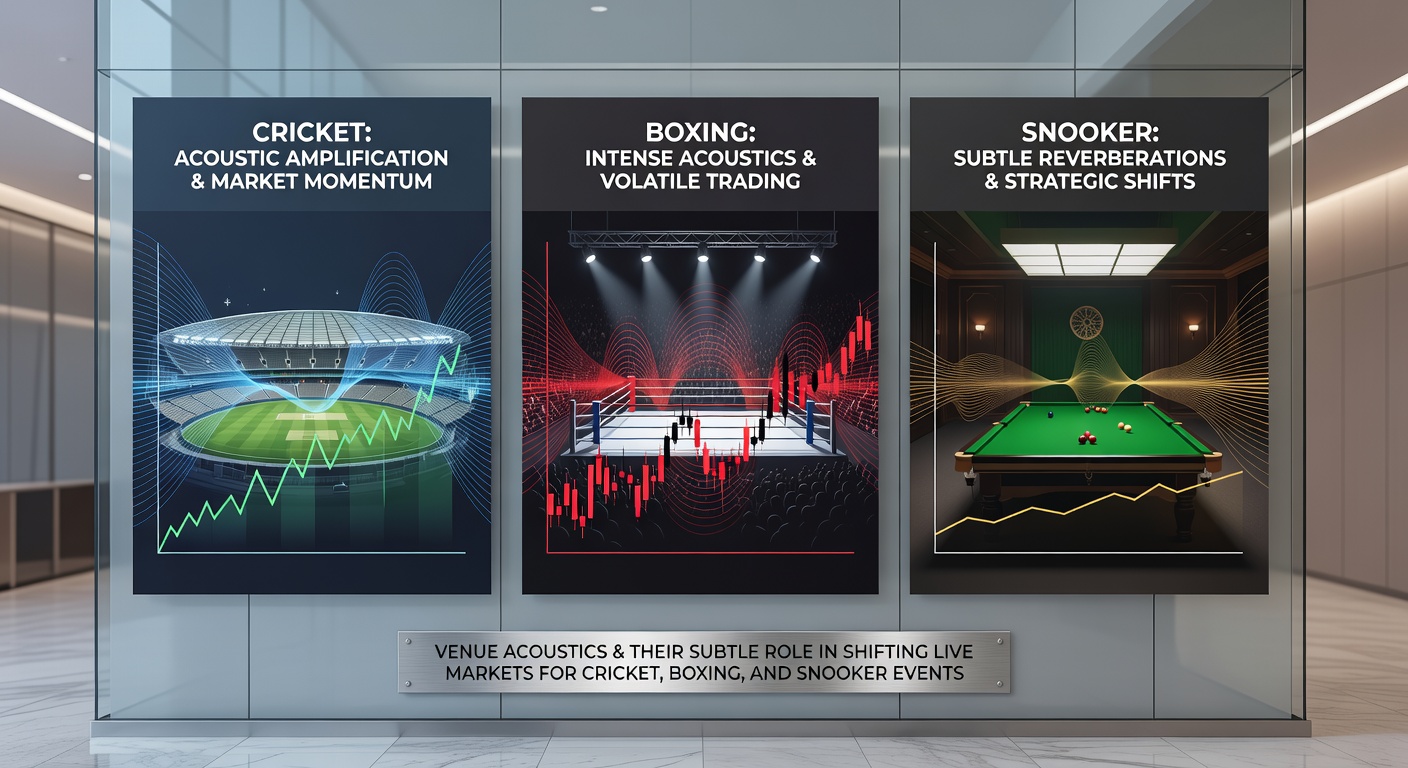
Cricket grounds with high concrete walls and tiered seating create distinct echo patterns that become pronounced during the final overs of limited-overs games. Researchers at the University of Melbourne documented that reverberation times exceeding 1.8 seconds in certain Australian venues coincide with a 4-7 percent rise in mis-hits on slower deliveries, prompting live markets to adjust run-rate probabilities within seconds of each delivery. In May 2026, several venues hosting bilateral series are scheduled to use updated acoustic baffles, yet early season measurements indicate that crowd-generated noise still travels unevenly across the playing surface, giving bowlers on one end a subtle advantage that bettors factor into over-by-over wagers. When a packed stand erupts after a boundary, the resulting pressure wave can reach the striker 0.3 seconds later on the far side of the pitch, enough to disrupt timing on yorkers and therefore move the implied probability for a wicket in the current over.
Boxing: Ring-Side Acoustics and Round-by-Round Momentum
Boxing arenas differ because the enclosed space and reflective surfaces around the ring amplify both crowd noise and the sound of glove impacts, creating an auditory environment that fighters must filter in real time. Acoustic studies conducted at Canadian venues hosting major cards found that peak sound pressure levels during championship rounds frequently exceed 92 decibels, and these bursts align with measurable drops in punch accuracy for fighters who rely on auditory cues to time counters. Live markets respond by widening spreads on combination bets whenever sustained cheering overlaps with clinch breaks, because historical data sets show an elevated chance of fatigue-related defensive lapses. Promoters have begun installing directional speaker arrays to even out sound distribution, yet ringside microphones still capture uneven reflections that travel back toward the fighters, producing the small but consistent performance variances that traders watch when recalibrating round-winner odds.
Snooker: Table Acoustics and Frame-Level Adjustments
Snooker halls present a more controlled acoustic setting, but even here the interaction between audience murmur and hard surfaces around the table influences shot selection. Measurements taken at several European ranking events indicate that background noise between 55 and 65 decibels can extend a player’s pre-shot routine by up to two seconds, which in turn affects the probability models used for frame-winner markets. When a sudden cheer erupts after a long pot, the sound wave reflects off the wooden surrounds and reaches the opposing player at the table’s far end roughly 0.15 seconds later, enough to register as a minor distraction on safety exchanges. Tournament organizers in 2026 are testing modular acoustic screens positioned behind each baulk line, and preliminary data suggests these installations reduce echo duration by 22 percent without altering the overall atmosphere that spectators expect. Live traders have incorporated venue-specific acoustic profiles into their algorithms, allowing them to anticipate when a sequence of frames might produce longer safety battles rather than aggressive breaks.
Cross-Sport Patterns in Market Responsiveness
Across the three sports, the common thread is that acoustic conditions alter the rate at which performance deviations appear, and these deviations feed directly into the speed and magnitude of live odds movements. A report from the International Sports Engineering Association highlights that venues with longer reverberation times generate higher variance in execution metrics during high-stakes periods, whether that is the final over, the championship rounds, or the deciding frame. Because betting platforms now ingest real-time audio level data alongside traditional statistics, the market depth for micro-markets such as next-wicket, next-knockdown, or next-color has increased measurably in arenas known for pronounced sound reflection. Event schedulers planning calendars through 2026 are therefore weighing acoustic retrofits alongside traditional capacity considerations, since even modest reductions in echo can stabilize player output enough to narrow the window for dramatic in-play swings.
Conclusion
Venue acoustics remain a background variable that live markets have learned to quantify rather than ignore, because the measurable link between sound environment and execution consistency continues to appear in aggregated performance data. As venues adopt targeted acoustic treatments ahead of the 2026 season, the scale of these effects may contract, yet the underlying mechanism will persist wherever crowds gather and surfaces reflect sound. Traders and analysts who integrate acoustic profiles into their models therefore maintain an incremental edge when odds adjust in the moments immediately following peak noise events.